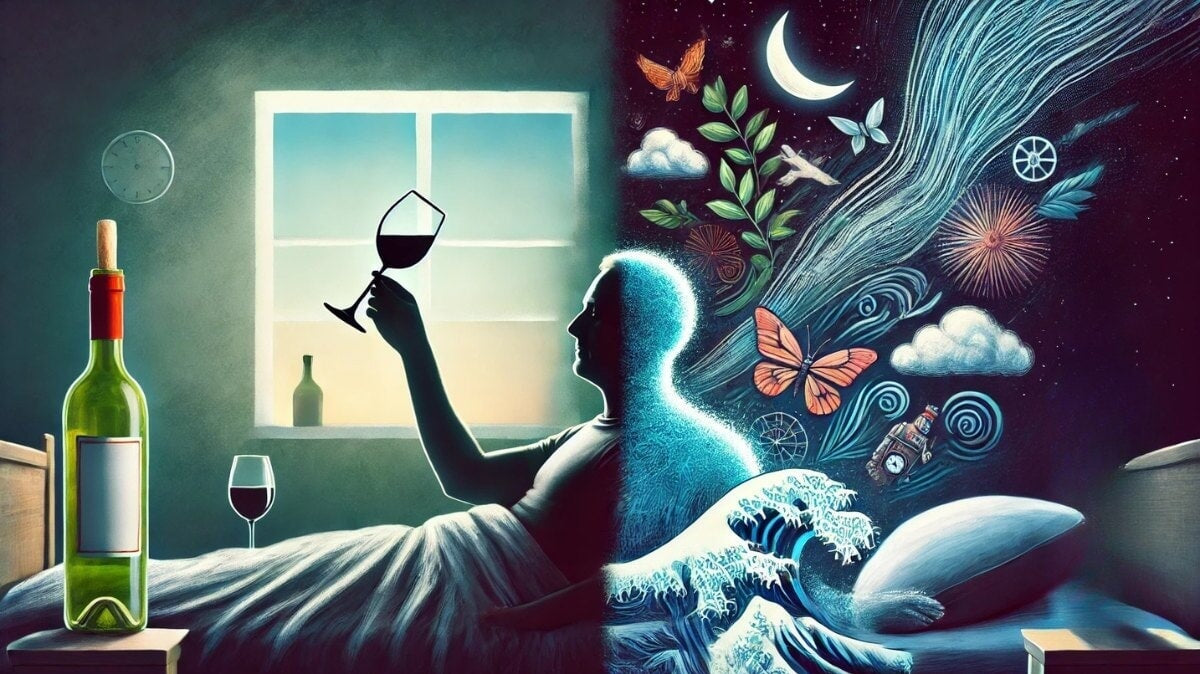



Are you one of those everyday heroes who work at night and sleep during the day? Thank you! It's not easy every day. We’ll explain why night work can disrupt your sleep and the subsequent health consequences. But more importantly, we’ll give you some essential tips to help you bring out the superhero within you.
A disrupted sleep-wake rhythm: the circadian rhythm
Nature is made this way: we sleep at night and we move by day. A 24-hour cycle calibrated for millennia to our planet's natural cycle.
Our brain, our organs, and our body are programmed like this. 5 PM? Peak muscle efficiency. The sun sets? Melatonin secretion begins. 2 AM? Deepest sleep. A real machine.
In very simple terms:
🌙 Ambient light decreases in the evening
👀 Retinal cells perceive this decrease
🧠 Which is then transmitted to the hypothalamus
📈 Which sends the signal for the pineal gland to produce melatonin (the sleep hormone).
😶🌫️ Melatonin creates the environment necessary for good sleep
🌅 In the morning when the light returns, the opposite phenomenon occurs.
A kind of genetic program that makes us nod off in the evening and gives us energy during the day. The body is so used to it that even after a night of work or intense gaming, it will try to return to the comfort of the 24-hour cycle.

But for many of us, it’s not that simple because our jobs impose a different, long-term rhythm. Night work, for instance, concerns 30% of public sector employees and 42% in service companies!
Over time, night work completely disrupts natural cycles. The body loses its bearings. The internal clock is thrown off because hormones are no longer inhibited and/or secreted at the same time.
🛡 You must then put processes in place to protect yourself (see below).
What is night work?
To put it simply, it is work performed between 9 PM and 6 AM (according to French legislation).
Night work can be regular or occasional and can involve various types of jobs, such as healthcare professions, security, transport, industrial production, and maintenance and cleaning services, among others.
🕛 regular night shifts
🕧 irregular shifts (but determined in advance)
🕐 split shifts (distinct periods)
🕒 rotating shifts
🎮 nights playing League of Legends (more common among teens)
The effects of night work on health

Sleep is truly the pillar of a healthy life. We talk about it in our complete guide on how to sleep better here. Beyond the impact on sleep, night work has other consequences.
⛑ Increased risk of illness
WHO studies confirm that night work can increase the risk of developing cancer.
👉 We are talking about several consecutive nights without a return to normal, years of nocturnal labor. Night workers produce less melatonin than day workers, and this hormone also has a "protective" function for our cells.
🍔 Poor eating habits
Night work is unnatural; we need to stay awake and focused.
It's a paradox: our body needs sleep and we impose the opposite, even if it means giving ourselves little sugary boosts.
Night work can cause digestive issues: we rush to sugar, coffee, energy drinks, or junk food, while the body is trying to put the organs to rest.
And we aren't even talking about cholesterol, diabetes, or being overweight... Beware of minor excesses and dysregulation: The risk of diabetes increases by 37% in men!
😰 Stress
By resisting the arms of Morpheus, we get used to being in a permanent state of excitement. When you stay awake and focused all night, it's not easy to come down to a state of calm.
Night workers tend to produce more cortisol during the day: the stress hormone.
Again, a vicious cycle, since this is exactly when the night worker is trying to sleep! This generates sleep disorders and prevents our body from recovering.
🥳 Social life
Returning from work, you would love to spend a full night—sorry, day—but here is the thing: it’s your kid’s judo competition, and it's the moment the neighbors decided to renovate their apartment. Impossible to find a cozy atmosphere conducive to sleep.
And it's a downward spiral: Our mood changes; we might become as sociable as a goblin behind platform 9 ¾.
People who work at night tend to reduce their social life, which complicates things even more.
But that's not all!
When you disrupt your sleep rhythm for several nights in a row, you increase the risk of workplace accidents. Everything is linked to drowsiness and a decrease in alertness. The risk is further increased for:
💪 work requiring physical exertion
♸ repetitive work
🕛 workers on shifts between midnight and 4 AM.
⏳ jobs lasting more than 9 consecutive hours
And no WRC racing during your commute—the risk of a road accident is 7 times higher!
Fortunately, there are defenses to help you take care of your inner temple.

The night worker's toolkit
Shadow and light
It is possible to trick your body into thinking it's night when the work is done.
Out with open windows facing the street and the splendid spring sun; in with the muted atmosphere of heavy curtains and earplugs. Dim the lights, sleep in a quiet, cool room, preferably in the morning when the body contains the most melatonin.
But that's not all! While staying under neon lights early in the evening is manageable, you absolutely must avoid blue light at least 3 hours before going to bed.
For this, nothing is better than blue light blocking glasses! A way to stay efficient at work while preparing your body for the rest that will follow.
Our glasses are here to help: the best filtration on the market with lenses that block up to 86% of blue light.
A champion's hygiene
If night work disrupts our sleep, physical activity at the right time... favors it. Plan a session before leaving for work; you will gain focus and well-being.
But upon returning from work, definitely not. You will need to refocus on yourself, the athlete's famous "cool-down" period.
🧘♀️ You have to release the pressure, take time for yourself. Why not try meditating?
Don't forget to warn those around you: sleep is sacred, and they can participate in your well-being. In the end, they will get you back in a good mood and in better shape!
Easy on the stomach
Seek out pre-prepared but balanced meals, and eat at fixed times. It is better to have your "meal" 2 to 3 hours after your shift starts, and something substantial: the body is still being kept awake by work.
If you are still tempted by sugar, know that it is a false friend. The little boost it gives is temporary, and the body gets used to it and starts demanding more! It is better to prepare your snacks in the healthy food aisle of your supermarket, with small, nutritious items.
As for caffeine: stop coffee at least 6 hours before heading under the covers... Or better yet, for the most daring, stop coffee altogether. We tell you everything here.
The final word: sleep disorders and night workers
All this is well and good, but Gotham needs you... Yes, it's hard to change your hours to reduce the effects of night work on your health.
Sleep is the fundamental foundation of good health, and night work changes everything!
We can still calibrate all this: eat better and without sugar, wear blue light glasses, sleep in the dark, allow yourself time to wind down, and overcome stress... All this so as not to let night work deteriorate our sleep.
We hope these little tips will help you find a healthier rhythm, physically and mentally. It’s for you that we design our products!