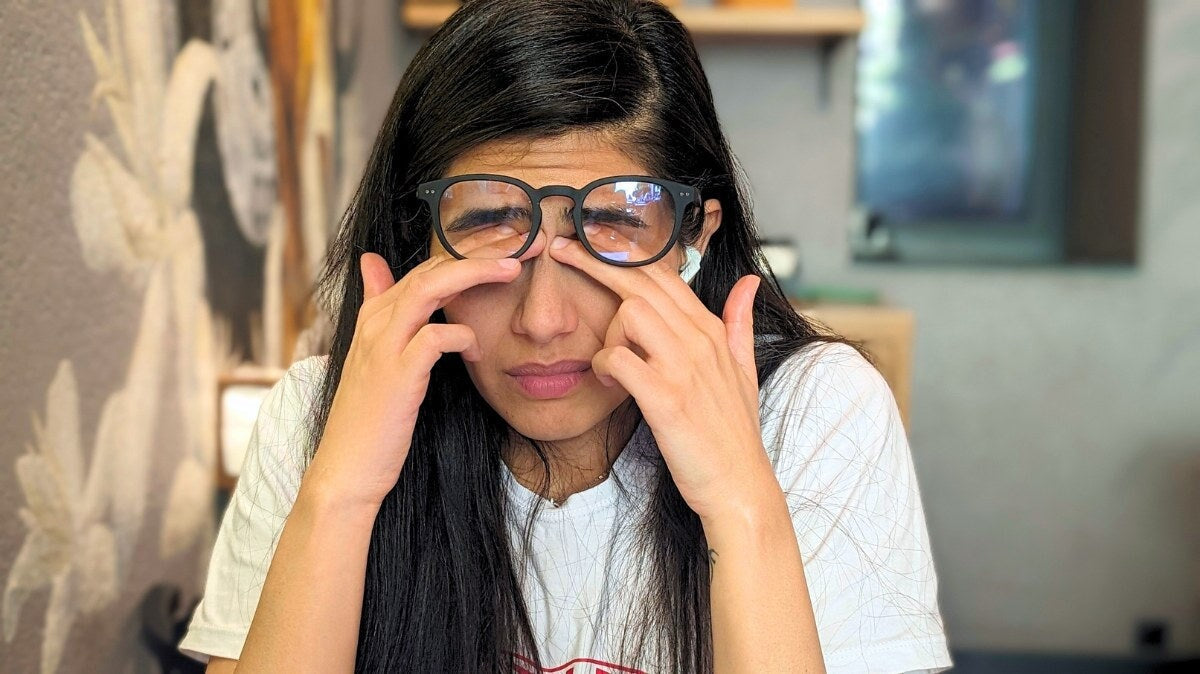




Tingling, itchy eyes, redness and irritation... Dry eyes are just a joy!
And you might think that wearing contact lenses on top of that can only make the problem worse.
Well, no! You can absolutely wear contact lenses if you suffer from dry eye, as long as they are suitable and you take care of your eyes.
Follow the guide, we'll introduce you to the best contact lenses for dry eyes.
What is dry eye?

Dry eye, or dry eye syndrome, stems from a dysfunction of the lacrimal system (glands + tear ducts): too few tears or poor-quality tears that no longer perform their protective and moisturizing function for the eye.
If you suffer from dry eye, you may experience one or more of these symptoms: tingling or itchy eyes, a burning sensation, red and swollen eyes, or increased sensitivity to light.
Dry eyes can be caused by several factors:
-
🤧 Allergies: such as pollen allergies or hay fever
-
🩺 Eye diseases: conjunctivitis, keratitis, or even diabetes
-
❌ Blocked tear duct: tears no longer drain properly. If this applies to you, know that we have prepared a list of the best home remedies to naturally relieve all of this
-
💨 Environment that is too dry, too dusty, pollution, or air conditioning
-
🔵 Prolonged exposure to blue light from screens and LED lighting: dry eyes are actually one of the symptoms of digital eye strain linked to blue light
-
💊 Taking medication or smoking
-
🏥 After-effects of eye surgery
-
👨🦳 Aging: over the years, eyes become drier because the amount of tears decreases
-
👁️ Wearing unsuitable contact lenses or failure to follow hygiene and usage rules: lenses are great, but you shouldn't wear them every day, nor for too long each day, and even more so if you have dry eyes.
In any case, if dry eye persists, we highly recommend that you consult a professional.
Dry eyes and contact lenses: not too much of a problem, if...
The reason why you may have dry eyes more often if you wear lenses is that the tear film that separates the lens from your cornea can break, deform, or even significantly decrease.
This happens most often when your lenses are not or are no longer suitable for your eyes: curvature, prescription, material, or quality of contact lenses are all causes that can damage this famous tear film.
Lenses can therefore cause dry eye, or make the problem worse.

But then, is it possible to wear lenses when you have dry eyes? Yes, as long as you choose suitable lenses and follow the advice of your ophthalmologist.
💡 Good to know: if you want to know everything about this subject, we have written a complete guide on dry eyes and contact lenses to inform you!
Which contact lenses should you choose for dry eyes?
We advise against coral lenses and the rest: if you start putting legumes under your eyelids, Darwin won't be happy.
When it comes to contact lenses, there are a whole bunch of them, with their advantages and disadvantages.
If you have dry eyes, some types of lenses may not be right for you: this is why (among other things) your doctor will surely have you try different models and brands before finding the perfect match.
💧 Hydrogel lenses and dry eye: the false friends

If you suffer from dry eye syndrome, you might be telling yourself that you need contact lenses with high water content. Well, this idea is false: it's actually the opposite! Indeed, soft hydrogel contact lenses, which are the "richest" in water, tend to dry out your eyes because they need to absorb more tears to maintain their shape.
So, be careful with the water content rate of your contact lenses: if it's too high, it could absorb too many tears and leave your eyes drier than the Sahara Desert.
For dry eyes, a low water content rate is recommended: up to 40%.
👉 Silicone hydrogel contact lenses: the versatile solution adapted for dry eyes

Now be careful, as the world of contact lenses has its reasons that reason knows nothing of, silicone hydrogel lenses ARE DIFFERENT from hydrogel lenses. There, I said it, in caps lock.
Soft silicone hydrogel contact lenses are made from a lightweight, flexible, and low-water-content material that lets your eyes breathe. A smart combo for respecting eyeballs even when they are parched.
You can find silicone hydrogel lenses in daily, monthly, or bi-weekly options.
Daily lenses are often recommended for people suffering from eye fatigue and/or dry eyes.
Their reduced maintenance and the fact that they do not build up deposits between uses are the main reasons why they are ideal for contact lens wearers afflicted by the curse of the shriveled eyeball (dry eye if you only speak Muggle).
👍 Rigid contact lenses: the ultimate weapon against dry eye

The ultimate solution for dry eye is rigid contact lenses: thanks to their low water content, they don't need water to maintain their shape and therefore don't risk drying out your eyes.
Double benefit: these gas-permeable rigid lenses let oxygen pass through, allowing the cornea to "breathe" by better capturing oxygen from the air or tears.
If you are interested in this option, be aware, however, that it is a longer process than choosing classic contact lenses: it will take several appointments with a specialist to achieve an ideal fit as well as a gradual adaptation period to get used to your new rigid lenses.
Arm yourself with patience, but it's worth it!
Lens wearers: our advice for taking care of your eyes

Wearing lenses requires scrupulously following hygiene rules so as not to end up with eyes as red as Snoop Dogg's. And this is even more important when you have dry eyes!
Here is some advice to follow to the letter:
-
Use suitable products: we are talking here about the liquid to clean and store your lenses (monthly or bi-weekly soft lenses, rigid lenses). When in doubt, always ask a professional for advice.
-
Follow the usage instructions: if you wear monthly contact lenses, do not exceed 30 days of wear for the same lens. Similarly, if you wear daily contact lenses, throw them away at the end of the day: reusing them might seem like a good idea, but in reality, it risks damaging your eyes.
-
Avoid wearing your lenses every day: give your eyes a well-deserved rest and switch to glasses at least two days a week, or more if you feel the need.
- ...and do not wear them for too long each day: it is recommended not to wear lenses for more than 8 hours a day if worn occasionally, or 12 hours if you are used to them. And if you have dry eyes, a few hours less won't hurt. Listen to your eyes and remove your lenses if irritation starts to appear.
-
Use eye drops in case of dry eye.
-
Protect your eyes effectively with our stylish blue light glasses to wear at work, on the couch, in your gaming room, in short, anywhere the most harmful wavelengths of blue light can attack you. This does not exempt you from taking regular breaks away from screens and banning your smartphone from your bedroom!
-
Consult an ophthalmologist regularly to check that your contact lenses are still suitable for your eyes. As always, prevention is better than cure!
💡 Good to know: if despite all our valuable advice your little eyeballs are still tired, we provide our best advice for resting your eyes properly and overcoming dry eye. No need to thank us, it's our pleasure.
Final word: best contact lenses for dry eyes
-
Contact lens wearers can be prone to dry eye: tingling sensation, itchy eyes, decreased visual comfort, red and irritated eyes.
-
If you wear contact lenses and have these symptoms, don't panic: no need to throw them in the trash! You can continue to wear them, provided you choose them carefully and follow the usage and hygiene rules.
-
The main criteria for choosing good, eye-friendly lenses are the water content and the material they are made of: exit hydrophilic soft lenses, prefer silicone hydrogel ones instead.
-
The best contact lenses to fight dry eye are gas-permeable rigid lenses (RGP) or daily silicone hydrogel lenses, not to be confused with hydrogel lenses, which are not suitable. All good, are you following?
- Lens wearers must always follow hygiene and usage rules to avoid irritating their eyes. We don't wear them for too long, we clean them well, we take breaks, in short, we follow all the ophthalmologist's advice.
-
As you might suspect, this article does not replace the advice of a health professional: to find out which lenses are right for you, make an appointment with a specialist!