



We've all been there: a big party, a night binge-watching the latest season of your favorite series, insomnia, a baby who won't sleep through the night... and bam, you're up all night.
And the next day, you're not feeling so tough: you're on the radar, with a caffeine-fueled performance and a strong urge to take a nap in the open-plan office, you know how it is.
Even though we don't all react the same way to sleep deprivation, not getting enough sleep can have serious consequences for our health.
So, how long can you survive without sleep? What happens in our bodies when we are deprived of sleep for too long? We'll explain it all!
The benefits of sleep: physical and mental health, immune system

First of all, let's lay the groundwork: sleep is essential for the body just like food and physical activity.
Indeed, getting enough sleep and having quality sleep is essential for maintaining good physical and mental fitness.
It helps to:
- 🪫 Recover: it seems obvious, but we need to rest to recharge our batteries, replenish our energy reserves, and get back in shape to face a new day
- 🤓 Promote memorization and consolidate learning: a good night's sleep helps you properly process all the information received during the day and also strengthens memory. It is during the night that our brain sorts through all the information acquired during the day
- 🦠 Boost the immune system: sleeping helps the body fight off external threats and microbes
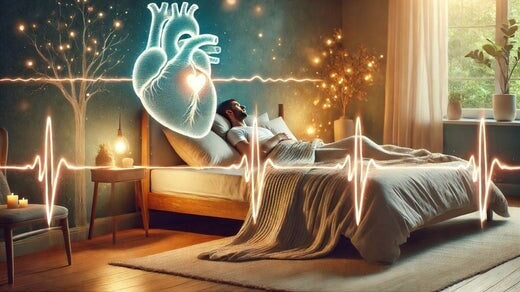
- ❤️ avoid cardiovascular diseases: lack of sleep is very bad for the heart and increases the risk of heart problems
- 😭 reduce stress, anxiety, and depression: poor sleep increases the production of cortisol, also known as the stress hormone, which is not a good sign for your mood
- 😂 stay in a good mood: have you noticed how much nicer and more positive you are when you're rested? On the contrary, when you're tired, you see everything in black and white, you're much more sensitive and irritable.
- 🍕 regulate metabolism and prevent weight gain: sleep helps regulate appetite, blood sugar, and fat storage. Basically, a good night's sleep prevents you from gaining extra pounds, but also reduces the risk of chronic diseases such as type 2 diabetes
- 🥰 regenerate skin cells: our tissues renew themselves during the night, which guarantees a fresh complexion, beautiful skin, and fewer dark circles
- 👵🏻 increase life expectancy: getting a good night's sleep helps you stay healthy and would reduce the risk of mortality from all causes
Everyone is different when it comes to sleep: official recommendations

Are you part of the "full throttle even after 3 hours of sleep" team or the "tired despite a 12-hour night" team?
You must have noticed, we are not all equal when it comes to sleep needs.
This is mainly explained by age. Generally, the older we get, the less we need to sleep.
- 👶 babies: between 14 and 17 hours
- 👧 children: 9 to 11 hours
- 👦 teens: between 8 and 10 hours
- 🧑 adults: 7 to 9 hours
- 👴 seniors 65 and over: 7 to 8 hours
Insomnia, sleep disorders: why do we sleep less well?

In recent years, our sleep quality has deteriorated sharply.
According to the National Institute of Sleep and Vigilance (INSV), we sleep on average less than 7 hours a night (exactly 6 hours and 42 minutes) on weekdays, which is not enough.
The reasons can be diverse and varied:
- 😴 Sleep disorders,
- ☕️ Consumption of stimulants before bedtime (coffee, alcohol...),
- 🍔 Meals that are too heavy (by the way, we wrote a detailed article on the ideal diet for a good night's sleep),
- 🏃 Exercise too close to bedtime,
- 👎 Poor conditions for falling asleep (bedroom temperature too high, light, noise...).
But two major causes mainly explain these difficulties falling asleep today: our mental health and our screen consumption.
Indeed, according to a 2023 INSV/MGEN survey, more and more of us are suffering from anxiety and showing signs of depression, which strongly impacts sleep.
Regarding screens, we spend our time glued to our electronic devices, especially in the evening and just before bedtime. (Don't pretend, even we do it!)
However, exposure to blue light emitted by screens is extremely harmful for falling asleep (among other things) since it stops the production of the sleep hormone, melatonin.
To counteract the negative effect of screens on your sleep, two solutions:
- 🚫 Either you reduce your exposure to blue light in the evening (the best): no more screens at least 1 hour before bedtime!
- 👓 Or you limit the damage by getting effective and comfortable anti-blue light glasses. Looking for the ideal model? We definitely have the one you need among our collection Nomade for everyday use, Gaming for avid gamers and also for the Kids.
How long can you last without sleep?

Let's move on (finally) to the question that probably brought you to consult this article: how long can a human being last without sleep?
It is difficult to know exactly how long you can last without sleep but, according to some studies, 72 hours without sleep would be the maximum the body could withstand (with enormous difficulties of course).
Fun fact: imagine that there really is a world record for the number of hours without sleep. It is held by Randy Gardner, an American student who was 17 years old at the time, in 1964.
He stayed awake for 264 hours, which is 11 days without sleep.
At the end of the experiment, the young man slept for exactly 14 hours and 40 minutes straight. You probably suspect it, it took him quite a while to recover and catch up on his sleep debt.
🚫 If you feel like beating this record, don't try it, because the Guinness Book decided to remove this category because of the risks it poses to health.
Because yes, even though Randy Gardner got away with it without consequences, such sleep deprivation is obviously not without consequences for our body.
Although sleep specialists agree that you cannot die directly from sleep deprivation, extreme fatigue can lead to many health problems and accidents (road, work...).
Sleep deprivation: the dangers for your body

We often experience sleep deprivation as torture and in reality, it is one!
Because yes, sleeping is a vital function. It is not for nothing that we devote nearly a third of our lives to this activity.
Just like sleep needs, the consequences on health can differ from person to person. But the most common symptoms are:
- 🥱 General fatigue and drowsiness
- 😰 Stress
- 😠 Mood swings, irritability, aggression
- 😥 Mental health disorders: anxiety, depression
- 🤔 Concentration difficulties and difficulty remembering information
- 🎈 Weight gain
- 🤧 Weakened immune system
- 💉 Increased risk of cardiovascular diseases, type 2 diabetes
- 🫀 High blood pressure
- 🤕 Less effective recovery: drop in growth hormone production, which is synthesized during deep sleep phases. However, this hormone is extremely important for tissue repair and muscle recovery.
Don't worry, you won't feel any of these effects after just one all-nighter or temporary sleep disorders such as occasional insomnia. All these symptoms should disappear after a good night's sleep.
Consequences around 24 hours without sleep

Did you know that not sleeping for 24 hours is equivalent to having 1 gram of alcohol in your blood?
A night without sleep does not present any particular risk to your health, but you may still feel some unpleasant effects:
- Vision and hearing disorders
- Reduced coordination
- Tremors and muscle tension
- Impaired judgment and decision-making
- Decreased attention and memory disorders
- Irritability
- Drowsiness
The effects of sleep deprivation around 48 hours

Two full nights without sleep begin to become difficult to bear for the body.
In addition to extreme fatigue, lack of energy, and the symptoms mentioned above, other effects emerge:
- Microsleep: this is a brain protection mechanism involving brief periods of unconsciousness (maximum thirty seconds) during which you fall asleep without realizing it. You generally feel disoriented upon waking
- Immune system deficiency: the activity of the cells that protect us against viruses and microbes decreases, so we are more likely to get sick
- Disorientation
- Mood disorders
- Attention disorders
- Speech difficulties
- Changes in body temperature
- Appetite fluctuations: chronic sleep deprivation can affect hunger regulation and satiety hormones.
- Cognitive disorders
What are the effects of several days without sleep?

It is very difficult to go beyond three days without sleep. The body is simply exhausted and can no longer hold on.
This is what can happen when you go several days without sleeping:
- You can have hallucinations: you see and/or hear things that are not there
- You can have behavioral disorders
- You can have difficulty interpreting reality, feel paranoia
- You can have difficulty performing multiple tasks at the same time
- You can have a lack of empathy, difficulty understanding the emotions of others
💡 Good to know: if you have difficulty falling asleep and having peaceful nights, we give you all our tips to get deep and restful sleep again.
Final word: how long without sleep
Sleeping is a vital function that allows us to stay in good physical and mental condition. Easy to understand: when we sleep, it allows our body to recover, but our mind too.
Even though you cannot die directly from sleep deprivation, the consequences it can have on our health and the repercussions it can have on our daily life are very dangerous.
You will feel the effects very quickly, from the first day. Your body will slow down and will hardly hold on for more than 48 hours without sleep. Beyond 3 days without sleeping, long-term effects can even appear.
Chronic sleep deprivation can have serious consequences on your physical and mental health. So to avoid mental disorders, cardiovascular diseases, cognitive deficiencies, diabetes, overweight, and depression, avoid pulling all-nighters!

Comments
Bjr, une nuit blanche et pour l’instant pas envie de dormir. Quand est ce que je pourrais dormir ?.
Je reste souvent 3 jours sans avoir pu dormir ..une seule heure
..les remedes classiques declanchant une agitation des
Incoercible des jambes sans repos l .
Sos sos !!