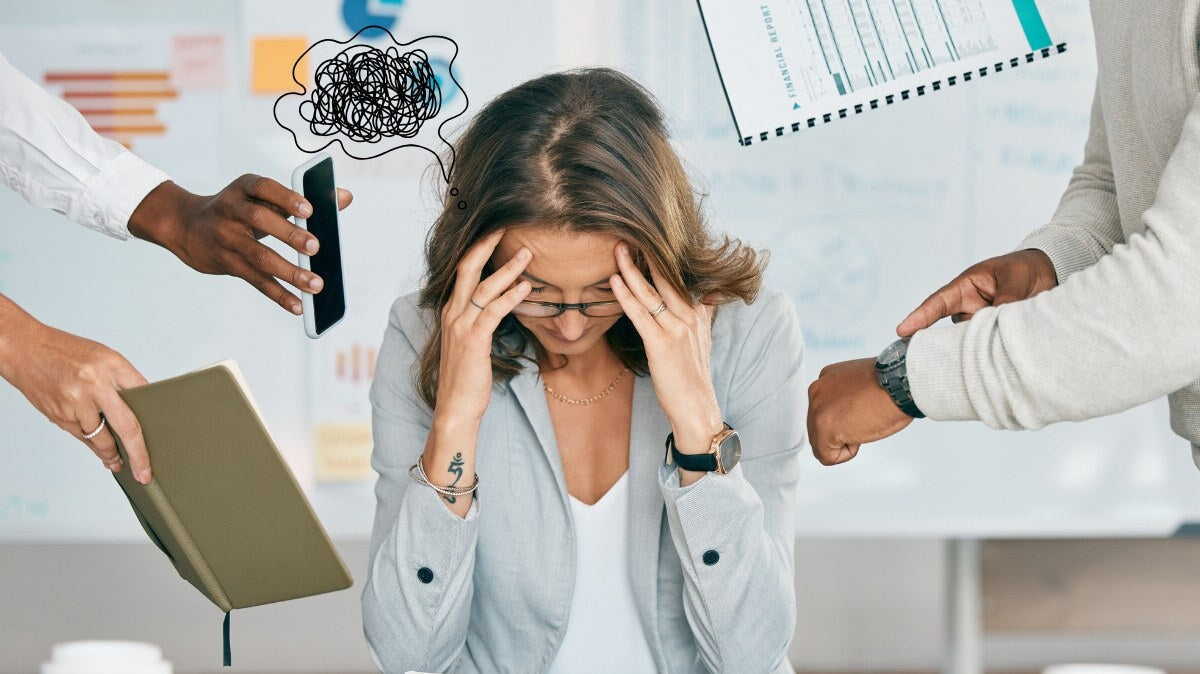



Anxiety is a state of psychological distress caused by the fear of a danger, whether real or imagined. By extension, it is a state of profound worry.
And with epidemics, wars here and there, social media, your irritable boss, that exam looming, a future to build, and Godzilla who might decide at any moment to flatten Nogent-le-Rotrou, there is no shortage of sources of anxiety.
The world is racing at 100 miles an hour without knowing where it’s going, and it’s not easy to stop and take a break!
Especially since anxiety is not without effect on your health. It can even go so far as to cause visual disturbances!
How? Why? And how do we manage to avoid them? We explain it all!
Anxiety and visual disturbances: what's the connection?
We have all suffered from anxiety at least once in our lives, if not more.
And the frantic pace at which we live today certainly doesn't help matters.
Whether it's simple temporary worry and nervousness in the face of a stressful situation or deeper issues, anxiety manifests itself in everyone to varying degrees.
When it is a passing feeling, this is perfectly normal and does not in itself represent a danger.

On the other hand, when anxiety disorders become persistent and chronic, it can cause numerous health issues.
When we talk about anxiety, we immediately think of well-known symptoms like heart palpitations, rapid breathing, high blood pressure, sweaty hands, digestive issues, headaches, nausea, or social withdrawal.
These rather unpleasant manifestations can make daily life difficult for those who suffer from them.
But there are also other symptoms that we don't necessarily suspect: visual disturbances.
But how can anxiety cause eye problems?
When a change or a situation we are not used to interferes with our normal balance, our body's natural response is very often stress.
When we are stressed or anxious, our nervous system is disrupted and on alert.
Adrenaline
This has the effect of releasing a high level of adrenaline into our body, which allows our system to face a potential threat thanks to increased light entering our eyes.

Basically, adrenaline mobilizes the energy stored in your body to face an emergency situation and acts as a boost of energy to help you overcome it.
👀 This adrenaline then causes our pupils to dilate, which are usually constricted when we are calm or tired.
Unfortunately, a too-high level of adrenaline and constantly dilated pupils can make our eyes more sensitive to light, modify intraocular pressure, and directly impact our vision.
Cortisol
Chronic stress also causes an abnormal rise in cortisol (also called the stress hormone) which helps to cope with stressful situations and manage daily stress.
Just like adrenaline, a too-high level of cortisol creates an imbalance in the autonomic nervous system, which affects the eyes and the visual system.
What are the visual disturbances linked to anxiety?
You surely didn't imagine it, but various visual disturbances can therefore occur because of anxiety.
Depending on the level of stress, these eye problems can be totally benign or more serious.

We still want to reassure you: if the visual disturbances due to anxiety and stress remain under control, there is no need to worry as in this case these are inconveniences without any real severity.
Among the visual disturbances caused by anxiety, we can cite:
- 🌵 dry eyes (we have good home remedies here)
- 🥱 eye fatigue (a deep dive into digital eye strain here)
- 😵 eye tension and pain
- 😵 eye spasms, also known as eyelid myokymia
- 🥴 blurred or cloudy vision
- 🫣 sensitivity to light
- 😖 eye floaters
- 🤯 ocular migraines
- 🤩 glare or the sensation of seeing stars in your eyes
- 🧐 tunnel vision (reduced peripheral vision)
- ❌ loss of vision in the most extreme cases
Let's focus on a few of these visual disturbances in particular.
Blurred vision

This is one of the most common symptoms when talking about anxiety and visual disturbances.
Blurred vision can manifest as a lack of visual clarity or a lack of sharpness in the visual field.
As the level of adrenaline and cortisol increases when we are anxious, our eyes' ability to focus is affected.
👉 Result: muscle tension occurs around the eyes, making it difficult to focus, and that is how blurred vision appears.
Another explanation for blurred vision could also be the increase in blood glucose due to anxiety.
This disrupts the functioning of the visual cortex, temporarily leading to blurred vision.
Ocular tension

As stated above, when we are anxious, our body is in a state of alert, which can cause high tension in the eyes and the unpleasant feeling that they are constantly under pressure.
It’s not great, but don't panic: we explore this topic in this article, but to summarize: ocular hypertension is most often benign, and if it is caused by anxiety, you will relieve it by addressing the problem at the source, which we return to below.
Eyelid myokymia

A twitching eye, a trembling eyelid—all these correspond to eye spasms, myokymia by its scientific name.
These are small, involuntary muscle tremors that occur in the region of the eye and eyelid.
Anxiety and prolonged stress can indeed be at the root of chemical imbalances in the body that disrupt muscle function, including the one responsible for closing the eyelids.
Most of the time, these tremors are fortunately benign and temporary. We have a comprehensive dossier on eyelid twitching to help you solve the problem if you suffer from it.
Loss of vision

So, don't panic: this is the rarest vision problem linked to anxiety.
But still, some people can experience temporary loss of vision during episodes of intense anxiety.
Most of the time, this symptom is temporary and vision is restored as soon as the level of stress or anxiety returns to normal.
In any case, if this type of disorder persists or worsens, it is urgent to consult an ophthalmologist for a complete exam.
Note that cortisol can also be the cause of several serious eye pathologies such as glaucoma, AMD (Age-related Macular Degeneration), or diabetic retinopathy.
The eyes are one of the most fragile organs, so as soon as a problem occurs, don't delay in going to see an eye care professional.
Our tips: how to prevent visual disturbances due to anxiety
So, of course, we don't claim to be able to solve your anxiety problems, but we can nevertheless give you some tips to try to reduce stress a little and preserve your eyes.
There are two areas to work on. First of all...
Good daily habits against eye stress
- 😍 good eye hygiene: anxiety combined with poor hygiene can strongly aggravate the harmful effects on your eyes. Remember to wash them regularly with clear water; if you wear contact lenses, change them every day; if you wear makeup, never go to bed without removing it first; and avoid putting your fingers in your eyes to prevent infections, especially when they are dirty.
- 🥗 a balanced diet and proper hydration: you've heard it enough: avoid eating too much fat, sugar, and salt. And yes, this can also have consequences on the health of your eyes. To keep them in good shape as long as possible, prioritize foods rich in omega-3, vitamins, and antioxidants (green vegetables, fatty fish, flaxseed oil, walnuts, herbal teas and infusions…). Also remember to drink enough throughout the day (at least 1.5 L per day).
- 💤 restorative sleep: sleeping well is essential for general health, and for the eyes in particular. We give you our tips for restorative sleep here, and how to sleep better at this address. And one last guide for the road: how to find sleep when you are stressed.
- 🧑⚕️ an annual visit to the ophthalmologist: there’s nothing better than a quick consultation with your eye doctor to check that everything is fine! They will be able to perform a thorough examination of your eyes and prescribe the appropriate treatment in case of a problem.
- 🏃 physical activity: a healthy lifestyle means sport! Just like diet and hydration, exercising is essential if you want to keep your eyes healthy.
- 📵 fewer screens: we talk about this a lot at Horus X. Excessive screen use is unfortunately not really compatible with good vision. The cause? The number 1 enemy: blue light and its harmful wavelengths for your poor eyes. So, don't hesitate to limit your screen consumption as much as you can, avoid them at least an hour and a half before going to bed, and protect your eyes with screen glasses.
- 👓 protect your eyes: we just said it, blue light is after your eyes. To filter out harmful waves, we have developed the best technology on the market to offer you screen glasses that are ideal for work and daily life, but also gaming glasses for intensive screen use. UV rays can also harm the health of your peepers when you step outside, but don't worry, we protect you there too with our collection of sunglasses, which are durable, anti-reflective, and super cute too.
- 👁️ eye exercises: to fight against visual fatigue, it is important to rest your eyes, so hop, we have written a complete guide. You can do very simple visual exercises like the 20-20-20 rule (every 20 minutes, look at an object at 20 feet (6 meters) away for 20 seconds), eye massage, blinking, or even try eye yoga with palming. This eye-relaxation method promotes the relaxation of the visual system and muscular relief of the eyes. To perform palming, simply get comfortable, rub your hands together energetically to warm them up, then place them over your closed eyes, with your elbows resting on a table. Tighten your fingers together so as not to let any light pass through; you should be in complete darkness. Then breathe calmly while staying in this position for 2-3 minutes, ideally several times a day.
- 🧘 relaxation techniques: we have a little guide of different meditation techniques at this address to help you take a few minutes for yourself and rest. We also have a yoga-in-bed guide for ultimate relaxation before drifting off into the arms of Morpheus. It is above all about knowing how to take the time to take a few minutes just for yourself; sometimes it works wonders!
Consult a professional to treat the symptoms of stress at the source
If despite these good habits, the visual disturbances linked to anxiety persist, don't hesitate to ask for help! Professionals will know how to treat your anxiety at the source, using several methods:
- psychotherapy: in order to reduce your anxiety, you can consider different therapeutic approaches (psychoanalysis, brief therapy, psychocorporeal therapy, art therapy, talk therapy...)
- stress management training: these trainings allow you to learn to anticipate stress and manage it better through adapted techniques such as sophrology, a practice that combines breathing, positive visualization, and relaxation techniques.
- Cognitive behavioral therapy (CBT): this type of therapy allows you to work on the link between your thoughts, emotions, and behaviors. The goal is to identify the mechanisms behind your difficulties and experiment with new behaviors to move past the distress you are feeling. The advantage of CBT is that it is relatively short-term.
If symptoms persist, don't hesitate to talk to your doctor, who can direct you to the appropriate professional to explore your options.
Final word: anxiety and visual disturbances
As if simply suffering from anxiety wasn't enough, you now know that it can be the source of certain vision problems.
No need to be alarmed, though!
If it is just temporary stress or mild anxiety, it shouldn't have much of an impact on your eyes.
However, if you are accustomed to constant stress or a fairly sustained level of anxiety, it is possible that it may affect the health of your eyes.
Nevertheless, it is possible to adopt certain good habits to try and reduce your stress as much as possible and allow you to maintain good visual comfort for a long time.
A healthy lifestyle, limiting screen time, and regular check-ups with an ophthalmologist combined with various relaxation techniques will be your best allies against anxiety.
If, of course, that is not enough, do not hesitate to turn to other approaches such as psychotherapy, stress management training, or cognitive behavioral therapy to treat the underlying anxiety.